Monday, May 26, 2008

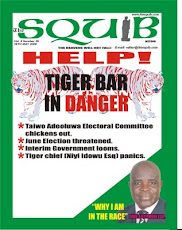
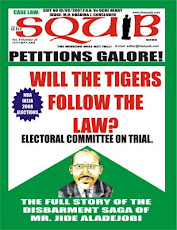
ILLEGALITY OR LEGALITY: WHICH WAY WILL THE TIGERS GO IN THE JUNE 2008 ELECTIONS?


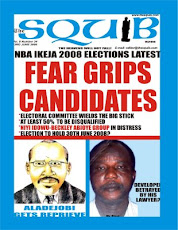
It is no longer news that the Ikeja branch of the Nigerian Bar Association is preparing to elect new hands to man her leadership. The incumbent Niyi Idowu administration will expire came June 2 2008.

But who will be the new leaders of the Tiger branch? The answer to that question lies not only with the electorate, but also on the conductors of the election.
For this year’s election, a three – man electoral committee to wit, Taiwo Adeoluwa Esq. Rex Onobrakpeya and Akin Akingbehin a.k.a idea’ was constituted amidst a lot of furore at the meeting of the Tigers of 4th May 2008.
Since her stormy and unavoidably political birth, the Electoral Committee has had no rest. Because of the sensitive nature of the assignment on her hands, every move, act or declaration of the Committee has been subject of all manners of speculation, and criticisms.
For example the very first decision of the E.C to wit to make Taiwo Adeoluwa Esq. (called to the bar in 1986) the chairman of the E.C ahead of Rex Onobrakpeya Esq. (called to the bar in 1985) raised serious suspicions in some quarters-that the ascendancy of Adeoluwa to the post of chairman above his senior colleague – Onobrakpeya was to give Adeoluwa a sure –foot hold to bend the electoral rules for the candidates supported by Niyi Idowu Esq. the incumbent chairman of the NBA.
Such quarters refused to believe that Adeoluwa, a financial supporter of the Niyi Idowu administration but who hardly participate otherwise in Ikeja bar affairs was not summoned by the chairman to help the fortunes of Beckley Abioye, whom he (Idowu) was sponsoring to succeed him as chairman.
Clearly the E.C has a huge task in her hands to conduct a credible election. As at press time, according to Mr. Akingbehin, the Secretary of the E.C. there was no less than ten petitions by and against various candidates in the election pending before her.
This is an unprecedented development. At least in the past twelve years of the Tiger branch, there was never such a wide rash of petitions before any E.C. Incidentally there had never been a time too that four persons would be contesting the chairmanship of the branch.
Squib’s investigation reveal that the most important question before the E.C and which may even tear the body apart is “whether or not to allow ALL contestants who have submitted nomination papers to contest regardless whether they qualify to so contest under the electoral guidelines of the bye – laws of the branch?
Of the four chairmanship contestants, only one, to wit Dele Oloke, appears to be clamoring for blanket clearance of all contestants irrespective of whether they meet the eligibility requirements of the bye-laws as candidates or not. Dele Oloke, who is bearing the cross of a negative eligibility report, is of the opinion that the rules be ignored. At a meeting the E.C held with all aspirants on Monday 12th May 2008, Oloke ingeniously submitted that “our bye laws is dead and as such should not be followed”. Curiously however in his further arguments Oloke was heard relying on sections of the bye-laws which moments ago he had declared dead.!
At the said meeting of 12th May, some of the contestants levied accusation against their opponents and some members of the outgoing executive committee, particularly Mr. Beckley Abioye, the incumbent General Secretary and Mr. Yinka Farounbi the Financial Secretary.
For example Mrs. Titi Osagie whose opponent Isa Mohammed Buhari alleged to have under paid her branch dues for year 2006-2007, claimed in her defence that it was Farounbi the Financial Secretary, who was her Principal in Chambers in 2006 who “deliberately under paid for me so that at a time like this, it can be used against me”. The lady went on to add that:
“But when I discovered this, I went and paid up the balance (N500:00) and collected the receipt. Unfortunately as I was going home, robbers attacked me in the bus and went away with my purse which contained the receipt”
While Mrs. Osagie was at her story, a gecko perching by the door was heard asking another gecko whether the lady ever studied creative writing at the University!
It appears that many of the petitions pertaining to the issue of attendance of the branch meetings up to the required level, challenges the veracity of the report of the incumbent General Secretary on the matter.
It would be recalled that in the last edition of the Squib, the Abioye report was thoroughly exposed as a document that told many lies in many parts.
At the meeting of the 12th May, Abioye himself in his capacity as a chairmanship candidate was present. In his brief defence of himself Abioye told the committee that they should not rely on the attendance lists which his office published and attached to minutes of the monthly meetings of the branch and circulated to members but rather should rely on the attendance notebooks which was in his care but now submitted to the committee.
When Abioye gave this advice, many people wondered whether the published attendance lists were not prepared from the attendance notebooks he was asking the E.C to rely on
According to geckos, the hero of the meeting was no other person than S.O.A Adesina Esq, the solo candidate for treasurer.
Unlike so many other candidates who were declared by the Abioye report as having fallen short of the minimum of 7 meeting attendance requirement, and were rooting for blanket eligibility for all candidates, Adesina declared that if the Electoral Committee finds out that he did not make the minimum requirement on attendance of branch meetings as stated by the Abioye report, he should be disqualified! A loud, widespread applause greeted this noble declaration.
At the end if the meeting, the E.C declared that it would investigate all petitions before it and that in that wise it would be meeting with both the General Secretary and Financial Secretary of the branch to clear themselves of the various allegations of falsification of records made against them.
Discreet investigations by the Squib reveals that the E.C., except care is taken, may split up. While the chairman, Taiwo Adeoluwa has expressed “my personal opinion” to all the contestants at the meeting of 12th May 2008 that it is best to allow everybody to contest because “there are too many petitions and too much tension” the secretary, Akin Akingbehin is of the mind that the proper thing to do is to follow the electoral guidelines.
However it appears that the chairman has expanded his view on the conduct of the election. Said Adeoluwa to the Squib on Friday 16th May 2008, “Our mission is to hold a credible election. We shall not close our eyes to the bye-laws. We are lawyers but at the same time we shall not close our eyes to the realities on the ground. The reality on the ground is that two (power) blocks are ‘fighting’. It appears one block has tampered with the records of attendance, while the other has tampered with the records of payment of dues. We shall look into all these allegations thoroughly.
I want to assure everybody that I am not in the E.C to do my one’s bidding. And anybody who is nursing any such hopes has failed”.
Mr. Rex Onobrakpeya, the third member of the committee spoke in like vein too. Speaking to the Squib on Saturday the 17th May 2008, Onobrakpeya said: “I chose not to be chairman of the Electoral Committee on personal grounds, even though Mr. Adeoluwa wanted me to be. I have no interest in anybody becoming anything. My own concern is that the Tiger Bar should not go into limbo and lose its Tiger identity.
I do not believe in speculations. People should wait for the outcome of our investigation. As at today, the out-going executive is accused of doctoring records. We shall investigate the claims dispassionately and then decide”
In his own view, Akin Akingbehin the E.C secretary strongly believes in the propriety of following the bye-laws in conducting the elections. According to Akingbehin in his chat with the Squib on Saturday 17th May 2008 “My own position is that our bye-laws should be followed. Our committee was set up to conduct elections and assess the eligibility of candidates and that we shall do. If we have a report from the Exco concerning eligibility of candidates, we must give it a presumption of regularity. But where there is a challenge to the report, we have to look at the challenge. If it is unmeritorious, we throw it out. But if it has merit, we uphold it. There is no big deal in disqualifying ineligible candidates from the elections. That is the law and it has been done before. In the 2006 elections some candidates were disqualified because they were found not to have satisfied the requirements governing the contest, I think particularly on the issue of attendance of monthly meetings. The disqualified candidates were ladies and their supporters even carried placards in protest, but nobody minded them because you can’t fight the law with sentiments.
I didn’t believe we, as Electoral Committee, have power on our own to discard the bye-laws of the branch. If the matter is referred to the-whole house and they say we should abandon the bye-laws in conducting the elections, then we can do it.
But if my colleagues in the E.C say that on our own, we should ignore the bye-laws to conduct the election I will honourably tender my resignation letter. I will not participate in such a thing”.

SQUIB’S POSITION:
There ought to be no debate about the conduct of the elections being in line with the bye-laws of the branch. That position should be taken for granted because it is the right and correct position to take. A professional body such as the NBA sets a very bad example to the society if she indicates that it is acceptable to distance itself from legality in the conduct of her own affairs.
Secondly the intendment of the makers of the bye-laws, was to ensure that only-committed members of the branch occupy her leadership cadre. Such a noble idea (the requirement of regular attendance of branch meetings and payment of branch dues not only for election candidates but also their nominators and seconders could only be to screen out diffident or irregular spectator-type, or nominal members from leadership cadre of the branch) would be defeated however if the eligibility rules are discarded in the conduct of the branch election. In such an eventuality, the greater the chance of the branch having on its leadership unsuitable characters lacking in knowledge and experience of bar activities and conduct becomes very high.
Thirdly where the E.C puts her feet down on the side of legality, a strong and clear message is sent to all members that only those who can sacrifice their time and money for the branch (by attending meetings regularly and supporting the branch financially) will be allowed in the corridor of the branch’s power. Thus adventurers and such unstable characters are shut out from gaining control of the branch and ruin it.

After all said and done, which path will the Taiwo Adeoluwa Electoral Committee toe in discharging her duties? Is it the path of legality or will it go the way of illegality?
The whole world is watching and waiting.

Sunday, May 11, 2008

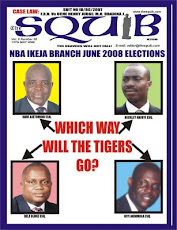
JUNE 2008 IKEJA BAR ELECTIONS: WHO WINS, WHO LOSES?


The most vibrant of all the branches of the Nigerian Bar Association, the Ikeja branch a.k.a “Tiger Branch” is in the breathless grip of a perfervid election fever. The election in question is the General Elections of the branch, slated for June 2 2008.
The inner and outer walls of the secretariat of the Tigers tell the story vividly as many contestants have turned them (the walls) into a huge canvas to paint their political portraits, via posters and bills.
As at the last official count courtesy of a curious and controversial list released on Wednesday 7th May 2008 by the out-going Secretary-General, Beckley Abioye, there are no less than twenty aspirants in the race for 10 posts.
Already petitions are flying against the Secretary-General, Beckley Abioye, who incidentally is also an aspirant in the race for Chairman, accusing him and the incumbent Chairman Niyi Idowu of fraudulent practices in the presentation of the list of candidates, a report which under the branch’s bye-laws serves as data which the electoral committee uses to screen aspirants for eligibility as candidates qualified to participate in the elections.
Under the branch bye-laws, a candidate to qualify to run in an election must be at:
(a) at least 5 years at the bar
(b) must pay his practicing fees as at when due for two years preceding the election
(c) must pay his branch dues for the two years preceding the elections
(d) must have attended the monthly meetings of the branch at least seven-times in each of the two years before the election.
A report indicating a compliance or non-compliance with these provisions of the Bye-Laws on the part of the contestants is made out by Secretary-General and to be pasted (made public) before the constitution of the Electoral Committee, a committee which is set up at the last month of the branch year which starts from July of an election year to May of the following year, a total period of eleven months.
Following complaints of bias and fraud against the preparer of the report, to wit Beckley Abioye, the Squib under took a scrutiny of the said report with the aid of geckos in high places and materials (minutes of Ikeja meetings for July 2006 to May 2007) supplied by the General Secretary himself and found out that the allegations against Abioye the Secretary were not specious. While the record exposes the eligibility inadequacies of certain candidates believed not to be in the camp of the Secretary, the same records covered the ‘sins’ of certain other candidates with false data.
As earlier indicated for year July 2006 to May 2007, the Secretary gave out minutes of the monthly meetings, eleven in all. All the minutes were adopted at the meetings, but only eight of them have attached, lists of members in attendance. The minutes of monthly meetings without these lists of attendance are for July 2006, March 2007 and May 2007.
The implication of this is that there are open records of attendance for 8 months while the records for the other three months are in special custody of the Secretary and so is not open to general scrutiny. We call these the hidden records.
SQUIB FINDINGS:
(1) CANDIDATE GBENGA AJAYI (ASSISTANT SECRETARY GENERAL)
. The Abioye record indicates that Ajayi attended the 2006/2007 year meetings for 9 times. Squib discovers that in the ‘open’ records, Ajayi attended 6 times (August 2006, September 2006, October 2006, November 2006, December 2006, January 2007, February 2007). To make the 9 minutes recorded for him, Ajayi must have been present in the three other ‘hidden’ months (July 2006, March 2007, and May 2007).

(2) CANDIDATE S.O.A. ADESINA (TREASURER). The Abioye report showed he attended the 2006/2007 meeting, 6 times. Squib discovers that in the ‘open’ records Adesina attended only 4 times. (December 2006, January 2007, February 2007, and April 2007). To achieve the 6 meetings recorded for him, Adesina must have attended at least two of the three months with ‘hidden’ records.

(3) CANDIDATE LEYE OMITOLA (FINANCIAL SECRETARY). The Abioye report credited him with 9 meetings attendance of the 2006/2007 year. The Squib discovers that in the open records that Omitola attended 7 times (August 2006, October 2006, November 2006, December 2006, January 2007, February 2007, April 2007). To make the 9 sittings recorded for him, Omitola must have attended two of the other month with ‘hidden’ records.

(4) CANDIDATE ABIOLA OKETOKI (SOCIAL SECRETARY). The Abioye report credited her with 8 meetings attendance of the 2006/2007 year. The Squib discovers via the open records of attendance, the candidate, known to be a special political darling of Secretary Abioye did not attend any of the meetings at all. Even if the candidate attended all the three months of 2006/2007 year with hidden records, she would still not have made the required number of 7 meetings attendance.

(5) CANDIDATE EMMANUAL OTOBO (SOCIAL SECRETARY). The Abioye report credited him with 8 meetings attendance of the 2006/2007 year meeting. But Squib discovers that even in the months with ‘open’ records, Otobo attended meetings 8 times (August 2006, September 2006, October 2006, November 2006, December 2006, January 2007, February 2007). It is rather inconceivable to imagine that a consistent meeting attender like Otobo would not be present in any of the 3 months with ‘hidden’ records

(6) CANDIDATE A. AHMED (WELFARE SECRETARY). The Abioye report credited the candidate with 9 attendance of the 2006/2007 year meetings. The Squib discovers that in the months with open records, Ahmed attended 7 times (August 2006, September 2006). To make the credited 9 meetings sittings Ahmed must have attended at least two of the three meetings with hidden records.

(7) CANDIDATE CHINWE JOY (WELFARE SECRETARY). The Abioye report credited her with 9 attendance in the 2006/2007 year. But the Squib findings show that the candidate attended only 5 meetings (September 2006, October 2006, November 2006, December 2006and February 2007). Even if the candidate attended all the 3 months with ‘hidden’ attendance records, she couldn’t have made 9 meetings, although she would qualify, since only seven meeting attendance is required

(8) CANDIDATE S. O. OMODARA (PUBLICITY SECRETARY). The Abioye report credited him with 9 attendance in the 2006/2007 year meeting but the Squib discovers that the candidate only attended 4 times (August 2006, November 2006, January 2007, April 2007). And even if he had attended the three meetings with ‘hidden’ records, his attendance would have only been 7, which qualifies him anyway.

(9) CANDIDATE LATEEF ABDUSALAM (PUBLICITY SECRETARY). The Abioye report credited him with 7 appearances in the 2006/2007 year meetings but The Squib discovers that in the “open records” the candidate only attended five meetings (August 2006, September 2006 December 2006, February 2007 and April 2007). So if the candidate attended only two of the other three meetings with hidden records, then he would easily make the 7 meeting marks credited to him.

(10) CANDIDATE TITILAYO OSAGIE (SECRETARY GENERAL). The Abioye report credited her with 9 appearances in the 2006/2007 year meetings. The Squib finds that the open records showed that she attended 8 times (August 2006, September 2006, October 2006, November 2006, December 2006, January 2007, February 2007, April 2007). To make the 9 attendance credited to her, the candidate must have attended at least one of the three other meetings with “hidden” attendance records.

(11) CANDIDATE ISA BUHARI (SECRETARY GENERAL). The Abioye report credited him with 9 appearances in the 2006/2007 year meetings. But the open records show that the candidate attended 7 meetings (August 2006, September 2006, October 2006, November 2006, December 2006 January 2007, February 2007) which qualified him at any rate, whether or not he attended the other three meetings with hidden attendance records.

(12) CANDIDATE MAIMUNA ESEGINE (2ND VICE-CHAIRMAN). The Abioye report credited her with 8 appearances in the 2006/2007 year meetings but try as hard as the Squib did, the candidate name could not be found any where in the open attendance records (8 months). Thus even if she attended the three meeting with hidden “attendance” records, she would still not have the 7 meetings bench mark.

(13) CANDIDATE TERRY ADENIJI (2ND VICE-CHAIRMAN). The Abioye report credited him with 8 attendance in the 2006/2007 year meetings. But Squib perusal shows that the candidate by the ‘open’ attendance records attended 6 meetings September 2006, October 2006, December 2006, January 2007 February 2007, and April 2007). Adeniji would meet the 8 attendance mark credited to him if he attended at least 2 of the 3 meetings with hidden records.

(14) CANDIDATE OLUFEMI DAFOSTA OSINOWO (2ND VICE-CHAIRMAN). The Abioye report credited him with 3 attendance in the 2006/2007 year meetings. Squib however finds that he made only 4 meetings in the ‘open’ attendance records (September 2006, December 2006, February 2007 and April 2007). To reach the 7 meetings bench mark, Osinowo must be recorded as present in the three other meetings with hidden attendance records.

(15) CANDIDATE DARE AKANDE (1ST VICE-CHAIRMAN). The Abioye report credited him with 10 attendance in the 2006/2007 year meetings. The Squibs finds that in the open attendance records, Akande attended 6 times (August 2006, September 2006, November 2006, December 2006, January 2007, February 2007 and April 2007). Curiously even though the October 2006 minutes recorded the participation of Akande, the attached list of attendees did not include his name. Akande must have attended the branch meetings with ‘hidden records’ to make the 10 meeting attendance recorded for him

(16) CANDIDATE CHARLES OGUNTUGA (1ST VICE-CHAIRMAN). The Abioye report credited him with 8 meetings attendance of the 2006/2007 year meetings. The Squib however finds that the gentleman came for monthly meetings in that period, only 2 times (February 2007, and April 2007). This is known through the open attendance lists. Even if the candidate attended the other three meetings with hidden attendance records, he would still not have made the 7 meetings bench mark required for contest eligibility.

(17) CANDIDATE BECKLEY ABIOYE (CHAIRMAN). The Abioye report credited him with 11 meeting attendance of the 2006/2007 year meetings. That means he attended all the meetings, an untrue fact. Open record of attendance shows that the candidate attended 7 of the 8 possible meeting. He was definitely absent at the November 2006 meeting, which minutes was taken and franked by A. Ahmed esq the Assistant Secretary General, hence the candidates name was missing in the list of EXCO members in attendance. Even if the Candidate attended all the three other meetings with ‘hidden’ report, he cannot make the 11 meeting bench-mark. Conversely even if he did not attend, he is already qualified to contest.

(18) CANDIDATE NIYI AKINMOLA (CHAIRMAN). The Abioye report credited him with 8 meeting attendance in 2006/2007 year meetings. The open attendance records show that he was present in 7 meetings (September 2006, October 2006, November 2006, December 2006, January 2007, February 2007, and April 2007). The candidate must have attended at least one of the other three months with ‘hidden’ attendance record to have made the 8 meeting mark. At any rate he qualifies to run.

(19) CANDIDATE DAVE AJETOMOBI (CHAIRMAN). The Abioye report credited him with 10 attendance of the 2006/2007 year meetings. The open attendance records show that the candidate was present in 7 meetings (September 2006, October 2006, November 2006, December 2006, January 2007, February 2007, and April 2007). This ordinarily qualifies him to run. He must have attended the three other meetings with hidden attendance records to have made 10 meetings attendance mark.

(20) CANDIDATE DELE OLOKE (CHAIRMAN). The Abioye reports credited him 6 attendance in the 2006/2007 year meetings. By the open attendance records, the Squib finds that the candidate only came to meetings four times (September 2006, October 2006, December 2006, January 2007). For Oloke to have been otherwise credited with 6 attendance mark, it must be that he attended at least two of the three meetings with ‘hidden’ attendance records. Either way the candidate does not qualify to contest.

Presently nobody knows what the stance of the Electoral Committee (EC) headed by Taiwo Adeoluwa esq chairman, with Akin, Akingbehin esq as secretary and Rex Onakprebeya as member would take on the eligibility of candidates to run in the elections.
However the Squib has it on good authority that candidates who have problems satisfying qualification indices are already making re-presentations to the E.C members to close their eyes to the rules and “allow everybody to contest”.
On the other hand, there are those calling for the Electoral committee to follow the constitution and due process in the discharge of their duties to avoid rubbishing the image of the branch and limiting the chances of confusion and controversy. The pattern of behaviour of the E.C in the conduct of the elections would have been more predictable if the outgoing chairman of the branch Niyi Idowu esq had had his way fully at the 5th May meeting of the Tigers during the nomination exercise of the members of the E.C.
Following a set, clear plan not to allow persons opposed to the candidateture of his own chairmanship candidate Beckley Abioye, to make any nomination into the 3 man E.C, his opponents shrewdly and almost magically slipped past him and with his consent to have an input in the E.C.
As things stand, except fairness and adherence to the provisions of the branch bye-laws are followed, the E.C itself may implode causing crisis in the branch. Contestants opposed to the Niyi Idowu group are watching with keen interest what the E.C would be up to, especially its leadership, believed in many quarters to have been hand-picked by Niyi Idowu to achieve certain ends.
The parade of contestants clearly shows that even now factionalised into about three parts, the dominant political caucus in the Ikeja bar remains the Progressive Bar Forum. For all the offices, they have supplied virtually all the candidates
In the chairmanship race for example, at least three of the four contestants, Dave Ajetomobi, Niyi Akinmola, and Beckley Abioye are clear PBF elements while the fourth person, Dele Oloke can also fairly contend that he is or at least was once a PBFite.
Dele Oloke esq is a veteran contestant, an Abraham Lincon of sorts in political post odessey. In year 2002 he contested the 1st Vice-Chairman slot and lost very narrowly (by one vote) to Hya Osahon Ihenyen. In 2004 he contested the same post with Niyi Idowu esq and was trounced. In 2006, the hardy political animal vied for the Chairmanship of the branch with Niyi Idowu esq, who was nominated by his then political caucus to step into the chairmanship post. Again Niyi Idowu had the upper hand with a landslide margin of victory
Now in 2008, Oloke is out there again in the ring. Can he succeed? Optimists and sympathizers of the Oloke cause think, the man may be lucky this time around. They hang their hopes on the division in the PBF family calculating that if the PBF candidates wear themselves out in ferocious attacks, Oloke may just gain a slim majority to take the crown.
But realistically speaking can Oloke comes out tops even in the face of the fractured behemoth of the PBF? The answer may very well be in the negative. For one Oloke may not be allowed to contest. There appears to be legitimate grounds to disqualify him as indicated in the report on candidates for the elections.
Secondly Oloke’s campaign for the high office was the last to take off, almost as an after-thought, thereby yielding quite a lot of grounds to his “early-birds” rivals.
Thirdly even as factionalised as they are, the PBF can hardly be trusted to leave any substantial morsels of votes for Oloke to gobble-such is their reach and persistent networking.
Fourthly, it would appear that strictly in his own, Oloke, although a comfortable looking and well dressed individual, does not have enough charm factor to woo a large number of people to his side. The reason is simple-the frank, almost too-outspoken Oloke is easily (and may be wrongly) perceived as caustic, temperamental and arrogant individual by many members.
Another chairmanship candidate to watch is Niyi Akinmola. A foundation member of the inner ‘family caucus’ of the Progressive Bar Forum, his emergence as a chairmanship candidate this time around is a bit of a surprise to many watchers of the political scene.
A former financial secretary under the Adekunle Ojo administration and the out-going Second Vice-Chairman, Akinmola is not without some experience in bar activism. Why he decided to break from his political family, a group of which he is a foundation member remains a mystery of sort. Stranger still was his decision to go for the chairmanship almost ‘solo’. In leaving his family, Akinmola touts himself to would be voters as a truly independent candidate out to make positive change.
But he has been unable to answer why he alone of his former comrades is an impeccable saint while the rest are devils and sinners.
Squib investigations show that the lack of a cadre or structure support for his candidacy may have forced him into either a secret alliance with the Niyi Idowu group to step down for Beckley Abioye at an opportuned moment. A shrewd study of the report on candidates submitted by Beckley Abioye as Secretary General revealed that a relationship exist between the duo. Conspicuously left absent in the Abioye report are the names of the nominators and seconders of the candidates, contrary to the bye-laws. Funny enough the particulars of these unstated nominators and seconders, such as their year of call, payment of practicing fees etc were given. This curious arrangement has a reason-to prevent the ordinary members of the branch to have a glimpse into the secret and special relationships between some candidates and their so called rivals.
For example Beckley Abioye according to the report was called to the Bar 15th December 1993, his ‘unknown’ nominator was also called to the Bar in 15th December 1993.
Interestingly Niyi Akinmola, one of his rivals was stated to be called to the bar on 15th December 1993, and also his own nominator was also called to the bar in December 1993! Even a villager knows that four added to four can only be eight. For good measure this magazine can reveal that the unstated seconder of aspirant Beckley Abioye’s nomination is no other person than his god-father, Niyi Idowu esq. If Niyi Akinmola continues in the race, what are his chances? It does not appear very bright although it can be said for the self declared ‘lone ranger’ candidate that he has campaigned fairly far and wide with limited measure of success.
The third chairmanship candidate is Beckley Abioye. Before 2006, Abioye was not much of an item in the affairs of the NBA Ikeja branch. His fortune changed when the inner family of the PBF adopted him as their candidate for the post of Secretary. Powered on by their famous political muscle, the PBF led by the very able Dare Akande, brought Beckley into office, unopposed. But almost immediately once in office and in conjunction with his mentor, Niyi Idowu who also rode the PBF horse into the chairmanship seat of the Tiger Branch, began to turn against their political family.
For starters, they prevented Adesina Ogunlana esq, whom they perceived to be an Adekunle Ojo clone, to be a part of ‘their’ government.
Secondly unlike in the Adekunle Ojo era, the duo of Niyi Idowu and Beckley Abioye began to distance themselves from the ready-made think tank that the inner family group of the PBF was. The duo were determined to run the show by themselves and as they deemed fit.
In doing this they started building a new caucus filled by new, inexperienced hands, upon whose fragile shoulders they thrust heavy burdens of the bar to perform.
Before long, the effect of this deliberate political decision began to show. The once vibrant Ikeja bar began to lose its shine not only in the outside world but internally. However the duo of Idowu and Beckley, believed that the past two years in the NBA Ikeja were wonderful ones, hence candidate Beckley’s campaign theme of “continuity and consolidation”. He is the only candidate carrying this banner, even his “half partner” Niyi Akinmola esq is talking about the need for change.
Can Beckley Abioye’s dream to become the next chairman of the NBA come to pass? On the positive side, this candidate has the advantage of incumbency on his side and is clearly in possession of enough sense of desperation to try just about anything to achieve his goal. By being the incumbent secretary, Beckley enjoys a certain level of visibility. With the full support of his chairman, he has not hesitated to take the advantage of his office to work “wonders” with records pertinent to the electoral contest ahead. Only a few weeks back the financial secretary the quiet Yinka Farounbi, who ironically sponsored Beckley into the bosom of the PBF had cause at an Executive council meeting of the branch and rightly too, to accuse both Beckley and Idowu of seizing certain financial records of the branch in his custody and tempering with same. The duo had no answer to the charge.
Still on the positive chance, whatever successes of the Idowu administration which includes raising up to about seven million naira for the FRA Williams Bar Centre and securing from the Lagos State Government, a new bus for the branch, Abioye can rightly claim to it, since it could be said that he is a major player in the regime.
On his own, Beckley stands very little chance, but supported by the scheming and deeply vengeful Niyi Idowu and who has been longer in the political jungle, Beckley will be a major-contender in the race. The essential campaign of the duo is to demonise their former political comrades, particularly the still popular Adekunle Ojo, the former chairman of the branch as a purloiner of branch funds while they (Niyi Idowu and Beckley Abioye) are the Mr. Clean. Their other former comrades like Adebamigbe Omole, Dare Akande, Isa Buhari, Dave Ajetomobi, Tajudeen Ibrahim, Yinka Farounbi, Adesina Ogunlana are portrayed as people prepared to cover up Adekunle Ojo’s misdeeds.
History however does not favour the emergence of Abioye as the chairman of the branch, this time around. All former chairmen and even the incumbent Niyi Idowu who were once Secretaries of the bar, came to the topmost jobs years after being secretaries. For example Mr. Bisi Ade-Ademuwagun became chairman of the Ikeja in 2002 but was secretary almost thirteen years earlier.
Dele Adesina S.A.N became the chairman in 1998, but was secretary in 1991 while Niyi Idowu who became the chairman in 2006 was the secretary in 1998. Already people are wondering why Abioye is in such a hurry to become the chairman in the presence of the two vice-chairmen willing to so become.
Another factor against Beckley is his apparent “juniority” in the scheme of things despite his relative prominence as secretary of the bar. In the PBF caucus he is the most junior of the PBF trio, to wit, Dave Ajetomobi, Niyi Akinmola and himself. In the herachy of bar positions, he remains junior to both Akinmola and Ajetomobi and is also junior to Ajetomobi at the bar, by three years.
In deflecting the change of juniority Beckley Abioye’s dismissive riposte was an arrogant “The only thing those who say I should step down from the race for Dave Ajetomobi can say is that I am junior to him”-as if it is a non-issue.
Thirdly in the area of personal charm, Abioye may not score highly. In the earlier period of his secretary ship, he was one secretary known to be harsh, and often impatient with people and speaking down on them in manner highly suggestive of irritation. In election times people remember such things of candidates, no matter the meek and gentle looks a vote seeking candidate may perforce wear presently.
Fourthly the Beckley Abioye and Niyi Idowu’s misadventure in the Dele Adesina matter-the issuance of a letter of “vouching” to Chief Rotimi Akeredolu S.A.N tacitly endorsing his candidature for NBA presidency to the detriment of the NBA Ikeja home boy Dele Adesina S.A.N, will work against Abioye’s chances.
When the issue came up at the very uproarious May 2008 meeting of the bar, both the chairman and his secretary, who unilaterally decided to ‘vouch’ for Akeredolu without notice to the other members of the Executive Committee escaped sanction only at the heavy intervention of the elders of the bar.
Fifthly Beckley Abioye does not enjoy the support of majority members of the Executive Committee. Perceived as high-handed and self-serving the common joke among members of the Exco is to describe his newly acquired Mistibushi Saloon car as “Mistibushi Imprest” a jab at what is considered to be a generous secretariat maintenance allowance allowed him by the chairman. If majority of the ‘Exco’ members were for Abioye, his plans of becoming the NBA chairman would have been made easier. Under him, the secretariat had not functioned too well. There was no particular improvement on the sanitation of the toilets and the ‘business centre’ of the secretariat packed up a long time ago and there are insinuations that most of the work done by the business centre workers were in the typing and photocopying of LLM course materials of the secretary.
The last but not the least of the chairmanship candidate is Dave Ajetomobi. Like Abioye, and Dele Oloke, he is from Osun State and has at least six years of service in the NBA as a publicity secretary, as a 2nd Vice-chairman and presently as the 1st Vice-Chairman.
Backed by the vast majority of the inner family of the influential progressive Bar Forum which includes the national leader of the PBF, Dare Akande, Adebamigbe Omole, the president of the Lagos State Chapter of the PBF and Adekunle Ojo, the former chairman of the branch, Dave Ajetomobi as at press time is still the candidate to beat.
For one, he has the most-experienced and largest political machinery behind him, the same machinery which brought the incumbent chairman and secretary to power. This is a great advantage because unlike some of his rivals like Dele Oloke and Niyi Akinmola who are just like Beckley whose structure is new and untested, Ajetomobi’s campaingigners are a bunch of tested committed veterans, who are even fired to greater commitment in the face of the political shenanigans of the Idowu-Abioye break-away faction and that of their half-partner Niyi Akinmola esq.
Secondly, Dave’s opponents for whatever reason have left to him to monopolise the platform of the only functional legal journal in Lagos State to sell himself to the electorate. This situation may prove crucial to his eventual success, as Osahon Ihenyen esq learnt to his cost in the 2004 elections, in the contest against Adekunle Ojo to become the chairman of the branch then.
Thirdly Dave Ajetomobi has maintained the cleanest campaign of all the candidates and his group can never be found talking evil of their opponents but always keep emphasising on the programrs of the candidate.
In favour of Ajetomobi is the fact that he and his group identified staunchly with the aspiration of the NBA Ikeja branch to produce the next NBA president via the person of Deacon Dele Adesina. For this astute decision to let bygone be bygones and support Dele Adesina’s presidential bid, Ajetomobi’s group has gained new supporters, even from quarters not ordinarily well disposed to the Progressive Bar Forum.
The large official bar, which Niyi Idowu-Abioye faction of the PBF has alienated and even lately antagonised does not appear to be against the Ajetomobi candidature, and this is a huge plus for him.
Yet the Ajetomobi candidature is not entirely problem-free, Because he is the standard bearer of the main inner family of the PBF, opponents of the PBF are happy that the PBF is fracturing and imploding and may not wish a main PBFite to gain power again since such can only strengthen the caucus again. This main group is being mocked as creating the Niyi Idowu-Beckley Abioye ‘monster’ and so must sink with it.
In some quarters, where the Idowu-Abioye administration is heavily loathed, the administration is hung on the neck of the Ajetomobi backers since they undoubtedly gave birth to the administration. The poser is “Were you not the ones who brought Niyi (Idowu) to us?
How are we sure this one (Ajetomobi) will not turn out just like him (Idowu)?
The constant link of Niyi Idowu to the Ajetomobi group despite his determined and deliberate break with members of his former political family is understandable considering his supposedly strong professional personal, even familial links with his former comrades particularly Tajudeen Ibrahim, Adebamigbe Omole and Oludare Akande a.k.a Leader. But that as somebody had pointed out “is politics."
From all indications, the two leading candidiates in the chairmanship elections are Dave Ajetomobi and Beckley Abioye. It is behind these two candidates that all other candidates contesting for other posts have queued behind.


A cursory look down the ladder shows that the Ajetomobi group parades a stronger and more experienced team. For example in the vice-chairman position, Ajetomobi’s group presents the very experienced and well known Dare Akande as against the relatively unknown Charles Oguntuga.
For Second vice-chairman, the duo of Terry Badmus Adeniyi (incumbent treasurer) and Dafosta Osinowo belongs to the Ajetomobi group while the Idowu-Abioye group presents a Meimuna Esegine, another relatively unknown political player.
For the General Secretary, the Ajetomobi group settles for the veteran party man-Isa Mohammed Buhari (1990 call year) while the Idowu-Abioye group presents Mrs. Titi Osagie (2000 call year) another new face in the NBA Ikeja affairs. For Social Secretary, the Ajetomobi group presents Emmanuel Otobo the out-going Auditor, called to the bar in 1990 while the Idowu-Abioye group presents Miss Abiola Oketoki, a 2002 graduate of the Nigerian Law School
For the office of the Publicity Secretary, the Ajetomobi group has settled for Lateef Abdusalam esq while the Idowu-Abioye group goes for S.O. Omodara
Judging from the analysis of the the Abioye report, many of the contestants under the Idowu-Abioye banner may in all probability end up disqualified, with the necessary political implications and consequences for the group.
So the question remains which way will the Tigers go in the June 2008 elections? The answer lies with the voters. Please ask them.

Monday, May 5, 2008

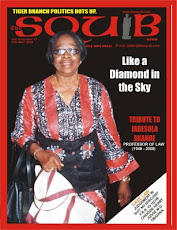
SPECIAL TRIBUTE TO PROFESSOR JADESOLA AKANDE


It is a popular lie but it is doubtful whether any one really believes it – that all human beings are equal. As far as I know people differ from the word go.
Conceptions can and are indeed unequal. Births are unequal. People came to this world in different ways and circumstances.


While here, they live unequally and when they die, they also die unequally. Even after shedding the mortal garb, they leave behind unequal memories remembrances and even consequences.
The life and times of a former mortal being, Professor Jadesola Olayinka Akande (Mrs.) amply proves thus.
It is not every mortal who has for progenitors, the rich, the famous and the powerful. Jadesola (as Professor Akande was simply known then) came from a renowned parentage. Her father Chief V.A Esan was a high chief in Ibadan, Oyo State while her mother, was a well known woman leader (Iyalode of Ibadan) educationist and a social activist, a contemporary of the legendary Funmilayo Ransome Kuti, the mother of all the famous Kuti brothers of the 1970s - 2006, Koye, Fela and Beko).


When the girl-child ripened to womanhood and heeded the call of matrimony, she did not weld her soul, spirit and body to an “efulefu” man but rather to a man of timer and caliber, the late Adebowale Akande, Senior Advocate of Nigeria, a foremost bar activist and leader, who ended up as – chairman of the very prestigious and highly influential Body of Benchers. It was this stylish and debonair Adebowale better known as Debo Akande who by the singular act of capture by marriage replaced Jadesola’s famous surname with his own equally famous name, and which name she bore proudly and wore like a bejeweled crown for forty - five years until her death.


Jadesola trained to be a lawyer and once qualified, in the broad- spectrum of the profession, chose to be a teacher. By dint of hard work, she became a Professor of Law, the very first female Professor of Law, as reports claim, in Nigeria. Jadesola was not just a teacher, but became an administrator. Crossing from the University of Lagos, she joined the Lagos State University, Ojo, Lagos on 2nd October 1985 to serve as Head of Department of Law. Then in 1987 she became the Foundation Dean of the newly created Faculty of Law, LASU till September 1988 when she became the Acting Vice - Chancellor of the University.


In April 1989 her appointment as substantive Vice – Chancellor was confirmed, a post she held till 31st March 1933.
After leaving her LASU job, which had become too hot, no thanks to restive workers and Students’ Unions, Jadesola did not fade into oblivion as many in her shoes would have done.
And, in the opinion of this magazine, therein lies the diamond’s strongest claim to greatness. She devoted her energies to promoting and protecting women’s rights, thus becoming a leading gender-activist.
Apart from collaborating with other women - interests group like FIDA, COWLSO, Akande founded the Women, Law and Development Centre, WOLDEC and became a consultant to bodies of the United Nations and African Union as a consultant on gender issues.
In 2000, Jadesola was appointed the Pro-Chancellor of the Federal University of Technology Akure and remained so until 2004.

How Jadesola ever came to be awarded and conferred with the Commander of the Order of the Niger in 1998 was a wonder. Not because the woman of substance did not deserve the award, and even more, but because in Nigeria, it is not in the character of the powers that be to give honour to the likes of Jadesola Akande, men and women of principle and advocates of social justice and liberty.


In December 2005, Jadesola, a Professor of Law, a Former Vice - Chancellor, was at the head of a body of women protesting against the unsafe skies that Nigeria had become, with the rash of plane crashes all over the country. The latest outrage was the Sosoliso plane crash that took away the lives of dozens of travelers including many school children.
The Jadesola Akande led protest was to take the form of a walk from the Opic Plaza along the Mobolaji Bank Anthony Road to the Government Secretariat. The women were armed with nothing more than their head ties and placards but the authorities responded by sending the police to tear-gas the protesters and scatter them.


Jadesola was no stranger to demonstrations. There were plenty of that in her regime as Vice- Chancellor LASU, especially in the last two years, (1991 – 1992) when virtually all the unions on the LASU Campus (LASUSU, ASUU, SATHURAI and NASU) were against her administration.
It is on record that Jadesola, tough and resilient as she was, refused to apply for a second term as Vice-Chancellor which she was entitled to in 1993, in the face of the combined forces of the Doctor, now Professor Dapo Asaju led ASUU-LASU and the Olawale Okuniyi (later Publicity Secretary, PRONACO) led LASUSU. The iron lady, of LASU as she was then known mercifully and narrowly escaped a tragic fate on December 8 1992 in the hands of rioting students who were flabbergasted to hear that Jadesola, who only twelve hours ago had openly come to agreement with ASUU-LASU leaders over car- refurbishment loans, turned round to say defiantly that she would not respect the agreement since it was forced on her under duress!


Not one to be intimidated, Jadesola responded by giving summary expulsion without trial to the leaders of the Students’ rebellion against her authority who were only recalled in October 1993 after prolonged legal and political battles.
Interestingly, long before her death, Mama, as she was popularly called by her students reconciled with virtually all the expelled Students’ Union leaders, who too in the maturity of latter years realised that just like them Jadesola was a kindred activist spirit and not the “Oyiboyi” they had wrongly thought her to be in the past.
At 68, Jadesola’s death came as a rude shock to many, especially when she was known to have participated fully and actively in a five - hour long birthday ceremony for another worthy child of Nigeria Chief Gani Fawehinmi S.A.N, on Monday 28th April 2008. Fawehinmi turned 70 on April 22nd 2008.
According to family sources, the amazon was hale and hearty all through Monday 28th April 2008 and went to bed, without any complaints. That was the last time, she would be seen alive, for by the morrow, the great educationist, administrator, lawyer, gender activist, social activist, and patriot was found dead in her bedroom. The real and true of death is known only possibly to her family, although her sudden death may be connected to the fact that since the death of her beloved husband Debo Akande, in 2004, it was said that she had no special interest in continuing life’s journey.


All said and done, Jadesola had a fortunate earthly existence. She had god parentage, a happy marriage and led a productive and useful life. She had left behind children and estates. But most importantly she left a good name.Blessed are the memories of the Just; so says the Scriptures Rest in Peace, Jadesola Olayinka Akande, great amazon and woman of substance. May the after-life be even more pleasant for your noble soul!

Monday, April 28, 2008

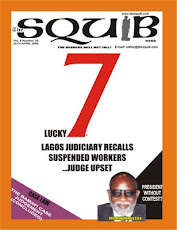
Lucky Workers Gain Recall From Suspension


Once upon a time, the squirrel was trying to persuade the tortoise that they should pay a visit to the Lion, the king of all the denizens of the forest, in his den. The tortoise was not to be persuaded.
Said the wily creature – “See my friend Mr. Squirrel, even though it is good and proper to visit the palace of a king and pay him homage, but from what I can see here, there are very many footmarks of those who go into that den, but only a few marks can I see belonging to those who come out”
Although, it is a tale, the following Lagos State Judiciary Staff, Yinka Idowu (Judicial Assistant) Ade Falade (Court Recorder) Lanre Okunnu (Senior Registrar) Faleti Adeyemi (Assistant Registrar) Remi Ige (Typist) Christy Ololo (Secretary) and Shehu Igunla (Computer operator)
can count themselves among the very lucky to enjoy the benefit of being recalled back to work by their employer after receiving disciplinary sanctions. The lucky 7 are like those few who visit the lion and manage to come back alive.
By a letter dated the 12th March 2008, signed by E. O Ogundare Esq. Deputy Registrar, (Admin) to each of the affected workers, they were accused of in adequate performance of official duties and poor conduct in the said duties and placed on a two week suspension.
On the same day of the letter of their suspension, the workers had also a letter of query, from the authorities directing them to respond to the allegations of a certain Barrister Dele Ajewole Esq. who claimed in a petition that the registrars of the court where all the workers have their stations, to wit, Honourable Justice Kasali’s court are in the habit of demanding money (N5,000 to N15,000) “on a regular basis from lawyers and litigant to process applications for rulings, orders and judgments.”
From what the Squib gathered, and authoritatively too, the allegations aforementioned shocked and frightened the workers a great deal. They were yet to have a breather on it when the order of suspension was slammed on them.
Reprieve has however come the way of these workers for one singular reason - the lawyer who wrote the petition against them could not be found to substantiate his weighty allegations against them. It would be recalled that in her Vol. 8 March 21, 17th March 2008, the Squib broke the story about the seven suspended workers and by dint of investigation proved copiously that the petitioner, the so called Barrister Dele Ajewole existed only in the realm of fiction and fantasy.
In the aforementioned edition the Squib wrote thus:
“In the light of these findings (that Barrister Dele Ajewole is non-existent) this magazine wonders at the credibility or merit of the petition against the affected workers. How will the accusation be proved? By proxy? By mere suspicion? By rumour mongering? By speculation? The ball is in the court of the Lagos State Judiciary to do what is right and just in this case”

A couple of weeks ago, the Lagos State Judiciary, took the right and proper step in the matter of the suspended worker – she recalled them from suspension and paid them their out-standing two weeks salary.
The authorities further directed that the Lucky 7 should back to their former station – Honourable Justice Kasali’s court. However the honourable Judge was not prepared to take the lot back. Her Ladyship simply rejected them.
From all indications, the rejected workers are not dejected by the judge’s decision – still smarting as they are from what they saw as their unfair suspension. They, the Squib was told, were not keen to work with the judge either, preferring a fresh posting.

Sunday, April 20, 2008

(1.) JUDGE ESCAPES EMBARRASMENT IN COURT (2.) WONDERFUL! JUDGE CHEATS CAESAR


5th March, 2008 is not a day Honourable Justice Benedicta Oluranti Shitta-Bey of the Lagos High Court can easily forget. It was a rather unusual day for the honourable judge as there was a serious attempt at ruffling the dignified feathers of the lord temporal, this, in his lordship’s very court.

One of the cases before the honourable judge on the 5th March was Charge No. LCD/133/02 State Vs Haruna Muraino and Ors. The matter was for continuation of trial of the accused persons to wit: Haruna Muraino, Femi Omolewa, Habeeb Fasasi and Saidi Oyelekan on a charge of armed robbery.

As at 5th March, 2008, the prosecution had long closed their case and the accused were in the middle of their defence. When the 1st accused person was called upon to make his defence, there was no problem, he did. But when it came to the turn of the 2nd accused person, progress in the case halted as the 2nd accused started manifesting signs of lunacy.

Keen followers of the case claim that it was sometimes early 2007 that Femi Omolewa the 2nd accused person started to show signs that his mental health was deteriorating.
By November, 2007, the only tangible progress that could be said to have been made in the case was the production of a medical report that stated that though the 2nd accused, Femi Omolewa talks coherently occasionally his case disclosed that he suffers from “acute mania and psychosis.” The report was signed by one Doctor Nebo K. G, Superintendent of Prisons. Consequent upon the report, Omolewa’s lawyer prepared an application for his bail and for the 3rd and 4th accused persons as well. The first accused was not included in the application, he having already being released from custody by the Chief Judge of Lagos State during a prison visit by His Lordship.
The defence counsel, who had prepared himself ready for the moving of the bail application had his work made easier by the dramatic, if scary actions of the 2nd accused person in court.

Suddenly in the solemn and mellow environment of the court was heard, a loud, bellowing sound. It came from Femi Omolewa, startling everything including the judge and some geckos on their invisible perch. But more vigorous drama was on the way. When Omolewa’s case was called, he and the other accused persons stood up and left their place for the dock. But instead of walking into dock as usual, Omolewa, charged towards a much bewildered Justice Shitta-Bey, excitedly at the honourable judge while shouting:

“You want to suck my blood!
You want to suck my blood!


Immediately, commotion overtook the whole court as the judge hurriedly called upon his orderly for protection and for the timely restraint of the accused person, who was promptly taken out of the court room. Moments after being taken out of the court room, Omolewa was seen half naked (only his trousers was on) lustily smoking a stick of cigarette. While Omolewa was “cooling down” outside the court room, his lawyer successfully moved the application for the bail of all the accused persons. The application was quickly and comprehensively granted, despite the opposition of the prosecution to the grant of bail to the 3rd and 4th accused who have no mental health challenge.

From all indications, Omolewa’s mental health might have become impaired due to long incarceration in prison. Arrested in June 2001 with all the other accused persons, it was only in March 2004 that the accused persons were arraigned before Honourable Justice Shitta-Bey. Unfortunately, it has become a strong tradition in the Lagos State judiciary for criminal cases especially of ordinary and common folks not to be determined quickly. A major cause of this sad situation is the attitude of judges of the Criminal Division to continue granting adjournments of trial at the instance of prosecution, even in the most glaring instances of lack of prosecution witnesses. To compliment this judicial attitude of “accused-persons-are-presumed-guilty-until the-contrary-is proved” only a few accused persons standing trial for crimes of armed robbery, robbery and murder in Lagos State are lucky to get bail even where prosecution has stalled trial for several months, even years, for lack of witnesses.In one word, administration of criminal justice in Lagos State is invariably slow, sometimes maddeningly too slow, for the victims of this ‘slow-coach judicial system – to bear with equanimity, leading to incidences like the ugly show of Femi Omolewa in Justice Shitta-Bey’s court on the 5th of March 2008.


VOL 8.NO 21, 17TH MARCH, 2008

SQUIB COVER STORY

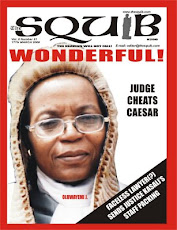
JUDGE CHEATS CAESAR

Give unto Caesar
What is Caesar’s
And unto God
What is God’s

This admonition of Jesus Christ, as recorded in the scriptures is well known and not only among adherents of the Christian religion. Ironically, this admonition given by the founder
of the Christian faith, to correct those who wanted to escape their civic responsibility, hiding under the cloak of religiousity or piety, was brazenly rejected and thrown to the dogs on Wednesday 12th March, 2008 by no less a person than a High Court Judge - honourable Justice Oyindamola Deborah Oluwayemi of the Lagos High Court.
How did it happen? On the said 12th March, 2008, no less than about forty people turned up in the honourable Judge’s court. They were made up of lawyers, accused persons, warders all ready for the business of the day. The cause list of the day showed that the court had about thirteen cases to attend to. Unfortunately, no business took place in the court that day, yet all the officials of the court came to work, at least ostensibly so.

At first, those in the court room did not know it was going to be a long, wasted day for them. Even when it was 10.00a.m., it never occurred to them that, they would achieve nothing. At about 10.30a.m, the court crowd, which had became worried a bit, became more perplexed when loud sounds clearly indicating that a fervent full-blown Christian Pentecostal worship had commenced inside the chambers of the honourable presiding judge,floated into the court room. As usual with christian pentecostal services, the session was loud and vigorous. Prayers of deliverance, of intercession of intervention were freely offered, invocations followed exhortations amidst emphatic assertions and declarations of halleluyahs and amens! That the honourable judge was in attendance was not in doubt, her ladyship’s mellifluous voice carried out from her chambers chapel to the court room. As the service progressed, even resident geckos, mercifully invisible in their perches, in nooks and crannies of Justice Oluwayemi’s court, became groggy with the fumes of the fervent prayers. At a point, so said the geckos, the atmosphere appeared thick with the “spirit” and some of the accused persons were seen looking hopefully towards the direction of the prayer-house thinking that perhaps their hour of deliverance had come.
Alas, it was a vain hope. Equally vain was the hope that the court would sit that day. Around 12.30p.m., it appeared that the worship session was rounding up. By that time, the lawyers present in court were clearly fed up, particularly so because, up till that time, there was no registrar or any other official of the court that came round to pass any information. They and their various clients were held down in the court, completely bereft of information about the direction of the court. At about 12.45p.m., tight lipped registrars came into the court with the curt news that the court “will still sit.”
As if to confirm the information, the registrars brought in case files. This act encouraged counsel and their clients, some of them who had been in prison custody for years to believe that some progress would still be made in their respective matters on that day.
However, when it was 2.00p.m., the registrars, without ceremony, though looking a bit shame-faced, started giving new hearing dates to the various cases.
One by one as the disappointed crowd of justice seekers walked forlornly out of the courtroom, a gecko who was sent to monitor their exit and record how many of them left with any gladness of heart or prayers for the court, was almost roasted with the intense heat emanating from the people especially the accused persons.
Instead of prayers, what the gecko heard was curses and imprecations. Nobody laughed or smiled, it was moans and hisses galore. And the geckos could not blame them because the time the presiding judge should have used to mete out justice to the poor souls had been used by the honourable judge to serve her own God on prayers and supplications!

BAR AND BENCH NEWS

GHOST PETITIONER SENDS JUDICIARY STAFF PACKING

The following Lagos State Judiciary workers Yinka Idowu (Judicial Assistant), Ade Falade (Court Recorder), Lanre Okunnu (Senior Registrar), Faleti Adeyemi (Assistant Registrar), Remi Ige (Typist), Christy Ololo (Secretary) and Shehu Iginla (Computer Operator) have, or had one thing in common - all of them up till the 12th March, 2008 were the supporting staff of Honourable Justice Iyabo Kasali of the Lagos High Court.


Another fact bind them together, that is their ‘joint and several” suspension from duty for two weeks without pay, effective from 13th of March, 2008. The travails of the workers was triggered off by a petition directed to the honourable judge I. O Kasali, dated 7/03/2008 and signed by one Dele Ajewole Esq. of the Dele Ajewole & Co Chambers with office said to be at Plot 114, Adetokunbo Ademola Street, Victoria Island, Lagos. In the said petition, the petitioner alleged that the registrars of the court were fond of demanding various sums of money ranging from N5,000 - N15,000.00 for processing applications asking for rulings, orders and judgements of the court. See Bar and Bench News Exhibit I. From all indications, honourable Justice Kasali did not waste much time in passing the petition to higher authorities, this after a small meeting with all her staff members where Her ladyship showed the petition to them.
On Wednesday the 12th March, 2008, the staff members of Justice Kasali’s court received two letters from the authorities at the same time. One was a letter of Query, with a copy of the petition as an attachment. The other was a letter of suspension from duty without pay for two weeks. See Bar and Bench News Exhibit 2.
According to the letter of suspension, the affected workers earned the punishment because “there had been several complaints against you regarding your conduct in the discharge of your official duties and that your performance has been grossly inadequate……. and there has been no improvement.” See Bar and Bench News Exhibit 3.
Squib investigations indicate that there may be more to this development than meets the eye. While it is known that corruption in the form of demand for bribery and sometimes outright extortion is rife among various layers of judiciary staff, it appears that the suspended workers may be targets of high level victimisation, and for some of them, outright objects of the application of instituted administrative policy of ‘scapegoatism.’
For one, the letter of query on the staff members strongly suggest that the administration, even as early as it is, and with no or scant investigation has already adjudged the workers guilty of the allegations contained in Dele Ajewole’s letter. See paragraph 2 of the query.
Another issue is that the letter of suspension of the staff looks too coincidental with the arrival of the letter of query to be innocent.
When the Squib got wind of this story, it decided to reach the petitioner to have a fuller picture of his allegations which were rather vague and generalised in his petition.
Unfortunately, all efforts to trace Dele Ajewole Esq. proved abortive. First, the GSM phone number left - 08030506999, despite several calls day and night never went through. Secondly, the address of the petitioner, to wit: Plot 114, Adetokunbo Ademola Street, Victoria Island is non-existent, except on the face of the petition.
For two hours on Thursday the 14th March, 2008 Squib Land Trackers even with the aid of “Okada” riders and Squib intergalactic radar beam simply could not locate the address for the simple reason that it never existed.
Much more worrisome is the discovery by the Squib via internet service that there is no Nigerian lawyer known and called Dele Ajewole. A diligent search of the website of the Nigerian Bar Association which listed lawyers from 1887 till 2007 indicated only the following Ajewoles as lawyers:

S.C.N NO. PRACTITONER NAME YEAR OF CALL

034486 AJEWOLE, ADEBAYO 1974
0367751 AJEWOLE, JOHN OLORUNDARE 1983

023842 AJEWOLE, SULAIMON AJENIYI 1989

023175 AJEWOLE, JOHN OLORUNDARE 1990
0404338 AJEWOLE, OYEWOLE 2004
050975 AJEWOLE, EZEKIEL OLANREWAJU 2006
….. AJEWOLE, GABRIEL OLUSAYO 2007

In the light of these findings, this magazine wonders at the credibility or merit of the petition against the affected workers! And if there is no real or actual accuser against an accused person, how will the accusation be proved? By proxy? By mere suspicion? By rumour mongering? The ball is in the court of the Lagos State Judiciary to do what is right and just in this case.

Thursday, March 6, 2008

'I'm Being Victimised' Falana cries out over SAN award loss


December 11, 2007


The Honourable Justice L. Kutigi CON.


The Chief Justice of Nigeria,


Supreme Court Complex, Abuja.


Your Lordship,


COMPLAINT OF DENIAL OF THE RANK OF SENIOR ADVOCATE OF NIGERIA ON POLITICAL GROUNDS.

It would be recalled that I applied for theAward of Senior Advocate of Nigeria in 2006.
Although I met the prescribed prerequisites, my name was deliberately excluded fromt the candidates shortlisted for the consideration of the Legal


rank of Senior Advocate of Nigeria. Apart from another-candidate (with whom I share similar political views), no other candidate was subjected to such harassment over his/her "political views or affiliations."
I was equally treated unfairly by the Committee in the assessment of my leadership role in the Bar. Since I was called to the bar over 25 years ago, I have been on the National Executive Committee (NEC) of the Nigerian Bar Association for 20 years. I represented the Nigerian Bar Association in the Council of Legal Education from 1998-2006- I was the Secretary-General of the African Bar Association from 2000-2002 and the current President of the West African Bar Association (WABA). I am also a member of the Pan African Lawyers Union (PALU) and the International Bar Association (IBA). Curiously, the honourable members of the Committee who assessed me are not active members of either the local or the international bar associations.
My office complex is a storey building at 25, Adekunle Fajuyi Way, GRA, Ikeja, Lagos. I have a well equipped Law Library and internet facilities in my office and residence. To my utter chagrin Mr. Yemi Candid- Johnson (SAN) who purportedly carried out a physical inspection of the facilities in my law office neither checked the books in the library nor asked questions on the availability of any particular law book. But he turned-in a report wherein it was stated that I had no practice books in my library! I have since confirmed that the said Mr. Candid-Johnson (SAN) was not even assigned to inspect the law offices of applicants in Lagos State. Surprisingly, the Legal Practitioners Privileges Committee adopted the unauthorized and imaginary report compiled by the learned Senior Advocate of Nigeria.
In my active legal practice of over 25 years, I have handled cases of outstanding legal importance. Not less than 50 of my cases can be found in established law reports. In some of the cases the novel points of law canvassed by me were upheld by the courts. Some of the cases include: Ogor Vs. Kolawole (1983) 1 N.C.R. 342; (1985); H.C; Sagay Vs. Alele - Williams (1987) WBRN 58 H.C; Onabanjo Vs. Obafemi Awolowo University (1991) 5 NWLR (PT 193) 549 C.A; In Re: Aluko (No1) (1992) 2 NWLR (PT 223)520 C.A; Madike v. State (1992) 8 NWLR(PT 257) 85; F.R.A Williams Vs. Akintunde (1995) 3 NWLR (PT 381) 101 C.A; F.G.N. Vs. Adams Oshiomole (2004) 14 WRN 110 C.A; Anya Vs. lyayi (1993) 7 N.W.L.R. (PT 305) 290 S.C; Comptroller, Nigeria Prisons Services Vs. Dr. Adekanye (2002) 15 NWLR (PT 790) 318 S.C; A.G. Ondo State Vs. AG Federation (2002) 27 WRN 1 S.C and Fubara Vs. Minimah (2003) 32 WRN 1. S.C
In handling the afore-mentioned cases and others I was privileged to have appeared against leading legal practitioners like the Late Chief Rotimi Williams (SAN), the Late Dr. Mudiaga Odje (SAN), Chief Afe Babalola (SAN), Chief Wole Olanipekun (SAN), Chief Ejike Ume (SAN), Chief Ebun Sofunde (SAN), Chief Akin Otujinmi (SAN), Kola Awodein Esq. (SAN) and Chief Emeka Ngige (SAN). I have also had the opportunity of being led in several cases of constitutional significance by the Late Chief F.R.A. Williams (SAN), Late Alao Aka-Bashorun Esq., Chief G.O.K Ajayi (SAN). Chief Gani Fawehinmi (SAN) and Chief Wole Olanipekun (SAN).
In the unreported case of ANPP & ORS Vs INSPECTOR GENERAL OF POLICE (SUIT No: FHC/ABJ/CS/54/04) 1 succeeded in persuading the Federal High Court to declare the provisions of the Public Order Act (Cap 382) Laws of the Federation of Nigeria 1990 prohibiting rallies or processions without police permit illegal and unconstitutional: The appeal filed against the epochal decision has just been dismissed by the Court of Appeal which declared police permit "retrogressive and primitive" in a civilized society. (See INSPECTOR-GENERAL OF POLICE Vs ANPP & ORS, Suit No: CA/A /193/05 in which judgment was delivered on December 11. 2007.)
Without sounding immodest only Chief Gani Fawehinmi (SAN) can be said to have handled more public interest cases than me in the entire Nigerian legal profession. As counsel to the Nigeria Labour Congress (NLC), Academic Staff Union of Universities (ASUU) and many other registered trade unions, I have handled more labour related cases in the Industrial Arbitration Panel and the National Industrial Court than any legal practitioner in the country. Apart from my active practice in the Nigerian courts, I have also been involved in litigation in the Special Court for Sierra Leone and the ECOWAS Community Court of Justice. 1 won my first case of constitutional importance in the Supreme Court of Nigeria in 1993. Without any attempt to embarrass anyone some of my colleagues who have just been conferred with the Award of Senior Advocate of Nigeria made their first appearance in the Supreme Court in the last couple of years or thereabout.
I was a contributor to THE ARTICLE 19 FREEDOM OF EXPRESSION MANUAL on International and Comparative Law, Standards and Procedures, The Bath Press, London. August 1993. Some of my other publications include: Legal and Policy Framework of Occupation Health and Safety in Nigeria in Idowu Awopetu et al (eds) (1998) WORKING IN DANGER P. 52 (a CDHR PUBLICATION ); Legal Position and Dimension in Occupational Health on Nigeria in Funmi Adewumi and Femi Omololu (ed) 1997 in Death by Installment: Occupation Health and Hazards in Nigeria P. 11, a Fredrick Herbert Foundation publication; The 1999 Constitution and Sovereign National Conference in Segun Jegede et al (eds) (2000); PATH ON PEOPLE'S CONSTITUTION, P. 86, a CDHR PUBLICATION; Corruption, Accountability and Transparency in Governance Under the Constitution in Dele Adesina et al (2000) in BURNING ISSUE IN THE 1999 CONSTITUTION, a Publication of the Nigerian Bar Association, Ikeja Branch, Lagos; Some Critical Questions on Constitutional Project and Development in Africa in Kwame Karikari (ed) 2002 in WHERE HAS AID TAKEN AFRICA? RETHINKING DEVELOPMENT, a publication of the Media Foundation for West Africa based in Accra, Ghana.
My 251 page book on Fundamental Rights Enforcement (published in 2004) is the only reference material on the Fundamental Rights Enforcement Procedure Rules. 1979. I am the Editor -in- Chief of the Weekly Reports of Nigeria (WRN); Ghana Monthly Law Reports (GMLR); Economic and Financial Crimes Law Reports (EFCLR) and ECOWAS Community Court of Justice Law Reports (ECCJLR) whose first volume will be published in January 2008. For some inexplicable reasons my humble contributions in the area of law reporting were totally disregarded by the Legal Practitioners Privileges Committee which has had cause, in recent time, to confer the Award of Senior Advocate of Nigeria on two distinguished legal practitioners on the basis of the law reports edited by them.
In August 1996 Chief Gani Fawehinmi (SAN), Olisa Agbakoba Esq. (SAN) and i were
honoured with the International Human Rights Award by the American Bar Association for our "extraordinary contributions to the cause of human rights, the rule of law and promotion of access to justice". I have also just been conferred with the Knight of Freedom Award by the Legal Aid Council of Nigeria in appreciation of my "meritorious, outstanding and selfless service to the promotion of the Rule of law in Nigeria."
In the fight of the foregoing, Your Lordship will agree with me that the Legal Practitioners Privileges Committee decided to deny me the award of Senior Advocate of Nigeria on the basis of my ideological stance. I am therefore compelled to crave Your Lordship's indulgence to inquire into the allegation of political bias in the selection process which led the Legal Practitioners Privileges Committee to subject my application to unwarranted discrimination on the ground of "political views or affiliation."

Yours sincerely,

Friday, February 29, 2008

Vol 8 No 18 25th Feb 2008- Lawyer in Soup: Docked Over Forgery of Court Document


LAWYER IN SOUP – DOCKED OVER FORGERY OF COURT JUDGEMENT
It is not a common sight to see legal practitioners in the dock of a court room. Their favourite perch is at the bar, pleading the cause of their clients and earning their fees. However, a legal practitioner, Obiorah Umeh Esq. forty-three years old had cause to face a court of law, on January 29, 2008 from the centre of the dock as an accused person. That court is Magistrate Court 3, Ikeja.
Alongside one Mr. Daniel Nwarienne, the barrister was arraigned on a three count charge of conspiracy to commit forgery, forgery and willfully making false claims in Charge No. MIK/C/06/2008. There are two immediate striking aspects of the case. First is that Obiorah Umeh’s co-accused is a client of the lawyer and secondly what the duo allegedly conspired to forge and allegedly forged was, of all things, the judgment of an Ikeja High Court in favour of Daniel Nwarienne delivered in April, 2007 (See cover story exhibit).
In that case, Suit No. ID/165M/2004: Daniel Nwarienne & Or Vs IGP & 6 Ors. Honourable Justice O.H Oshodi found that the defendants (except the 3rd) had violated the constitutional right of liberty of the applicants and awarded the applicants the sum of N100,000 jointly against the 1st 2nd 4th 5th 6th and 7th defendants jointly and severally.
Unbelievably, this happy development was to lead to unhappy consequences for the 1st applicant in the suit, Daniel Nwarienne and his lawyer Obiorah Umeh. Inner sanctum geckos informed the squib that several months after the judgment in the suit was delivered, precisely on the 25th day of January 2008, a certain barrister turned up in Honourable Justice Oshodi’s court requesting to meet with the registrar. The gentleman barrister was not Obiorah Umeh Esq. but he said he had come to verify and certify a judgment of the honourable court in Suit No. ID/165M/2004.
The registrar who attended to him straight away noticed that the copy of the judgment in question brought out by the lawyer had a signature different from that of his boss, Oshodi J. When he told the lawyer his observation, the lawyer demurred claiming that there was nothing wrong with the judgment in his hand. The registrar however insisted on his point, a position which irritated the lawyer greatly. The argument soon became loud and then hot since neither the registrar nor the lawyer would yield ground. To the greater annoyance and bewilderment of the lawyer, the registrar upon closer perusal of the judgment found that the sum awarded in favour of the applicants was five million naira!
If the registrar was in any doubt before that the judgment the lawyer brought was ‘genje’ (fake), such doubts vanished immediately. Yet, the lawyer insisted that the registrar’s claim could not be right. At that point, it was decided that the best thing to do in the circumstances was to draw the attention of Honourable Justice Oshodi to the situation. When this was done, the judge, stared in the face with the brazen forgery of his order and signature wasted no time in bringing in the police. The police arrested the lawyer who appeared, and to some geckos trully embarrassed and very bewildered at the turn of events. According to out-field geckos, the lawyer explained to the police that he was innocent of any crime, as according to him, the document he came with was given to him by Mr. Daniel Nwarienne. According to the man, Nwarienne had told him that the judgment in turn was given to him by Barrister Obiorah Umeh, his lawyer in the fundamental right suit before Honourable Justice O.H Oshodi.
The police allowed the lawyer to put a call to Nwarienne who he asked to come to the police station to clear him, since he was only helping him (Nwarienne) certify what he believed was a valid court judgment in his favour.
At first, the police doubted whether Nwarieene would show up. But the man came and was promptly arrested. When he corroborated the detained lawyer’s story, the lawyer was eventually let off the hook.
But another lawyer was soon to replace him in detention - none other than Obiorah Umeh. At the end of their investigations, the police believed that both Nwarienne and Umeh are culpable of forging the judgment of Justice Oshodi and had a common intention to achieve that end. Upon his arraignment before the court of law, Barrister Umeh was granted bail by the court. Unfortunately, the gentleman stayed for some time at the Government Lodge, KiriKiri, eating the ‘king’s rations’ before his bail was perfected. The next hearing date of the case is 26th of March, 2008.

Tuesday, February 19, 2008

Vol 8 No 17 18th February 2008 'DEBRANDING THE NBA'


DE - BRANDING THE NBA – EXPOSING THE MAKURDI NEC AGENDA OF AGBAKOBA S.A.N
If the present leadership of the Nigerian Bar Association have their way, elections into offices in the association would never be the same again.


In the association there are fifteen “National Offices to wit - president, 1st Vice - President, 2nd Vice - President, 3rd Vice - President, Secretary, 2nd Assistant Secretary, Treasurer, Financial Secretary, Publicity Secretary, Assistant Publicity Secretary, Welfare Secretary and Legal Adviser.
Before 1998, the elections into these offices were General, that is, all interested members of the association were eligible to vote for all those eligible to contest in any of the offices.


However, after the protracted crisis that plagued the NBA for six years following the scuttled elections in 1992, in Port Harcourt, Rivers State, the general nature of the plebiscite was changed to make the elections a delegate one. Under this arrangement, voting is carried out by accredited representatives (delegates) from each of the branches.

Another fall out of the 1992-1998 crisis was the emergence of political regional/tribal blocks in the Association. Hitherto, the main divide was along ideological lines, the so called progressives (or activists) and the conservatives. Some watchers and historians of the lawyers’ association believed that the emergence of WAZOBIA formations i.e. North, East (South) and West in post 1998 NBA was due to the perception in some quarters that one of the causes of the 1992 crisis was the overbearing influence of westerners (South - West lawyers, mainly Yorubas) in the leadership of the NBA. According to members of that school of thought, majority of the past leaders of the NBA were Yorubas, a development said to be upsetting to other groups, particularly Northerners, notwithstanding that, Western Nigerians were exposed earliest to Western and legal education and were vastly more in numbers in the law profession especially in the 50s, 60s, 70s, and even up till the 80s than other groups of Nigerians.

The concomitance to the emergence of regional/tribal blocks was the emergence of the idea of rotating the prime leadership of the bar, to wit, the presidency among these groups, so that contest into the West would no longer become an-all-comers’ affair. However, another school of thought believed that the idea of rotating the presidency of the NBA ironically was started and championed by the Western regional group under the auspices of the unrepentant irredentists group - Egbe Amofin Yoruba, based in Ibadan, under the leadership of Chief Bamidele Aiku S.A.N went, for cheap political gains and immediate narrow calculations. It was the Egbe leadership in 2000 who negotiated with the leaders of the Eastern Group that, it should be agreed that if Wole Olanipekun S.A.N, a Yoruba and a leaders presidential contestant should step down for O.C.J Okocha S.A.N, an Easterner so to say, then the presidency should go to the West in 2002 and the North should have it 2004.

In the 2000 presidential election there were only three contestants – O.C.J Okocha, Wole Olanipekun. Both Onakoya and Olanipekun are Yorubas. At the end of the day, Olanipekun stepped down and out of the race while O.C.J Okocha went on to defeat Segun Onakoya and become president.

In the 2002 elections which took place in Ibadan, the contest was only between two persons, Onakoya and Olanipekun again, both Yorubas. Olanipekun roundly defeated Onakoya with over whelming support from the East and the North which had apparently bought into the Zoning Formula.

Consequently the 2004 presidential elections, had three of the four contestants as Northerners, to wit Bayo Ojo (Kogi) J.B Daodu (Kogi) and A.B Mahmond (Kano). The firth contestant was an Easterner, Philip Umeh, the Former Secretary - General in 2000-2002 under O.C.J Okocha. The outcome of the election was that Bayo Ojo S.A.N, though a Yoruba complied as a Northerner, while Philip Umeh not only came out last but being an Easterner was derided as an odd man in the election. If the 2004 elections left any one in doubt that the “Zoning Formula” is now an active reality in the NBA, the 2006 elections dispelled any such doubts.

In the 2006 contests, there were only three contestants: Olisa Agbakoba S.A.N, Chris Uche S.A.N and Funke Adekoya S.A.N. Funke Adekoya, a Former 1st Vice – President of the Association and obviously good leadership material came a dismal third position essentially because she was perceived as flying against the arrangement amongst the Regional/Tribal blocks that in 2006, it was the turn of the Eastern Region to produce the president of the NBA.

Before Olisa Agbakoba, the winner of the 2006 presidential contest came on board he had during his campaigns stressed vigorously severally that he would re-organise or revarying the NBA as a professional to make it much more dynamic, efficient and more modern. He had a beguiling catch-phrase for this all important project of his – RE- BRANDING.

Unfortunately more than half through with his tenure as leader of the NBA, the much touched re-branding of the NBA promised by the man dubbed by this magazine as a “ velvet activist” way back in 2006, has not happened. In failing to achieve the amendment of the constitution of the NBA that would pave way for the much advertised administrative wizard in form of Chief Executive officer for the association the NBA has not undergone any in rotating only the presidency of the NBA among regional/tribal groups, Agbakoba is very much interested in extending the rotation virus to half of the available offices of the NBA.

The road to the implementation of this objective started in earnest at the 2007 November NEC meeting of NBA Maiduguri where a guided and depleted NEC allegedly adopted the “policy of inclusion in relation to election of National Officers.”

After the alleged adoption of “inclusion policy” the softer language for zoning formula, by the NBA NEC, the NBA president constituted significant and positive administrative overhauling under Agbakoba. Any changes in the administration of the NBA has only superficial, tangential and a more out – fitting of existent positions to Agbakoba’s tribe of loyalists and followers. Curiously, Agbakoba who many used to take for an activist or even a subscriber to radical politics appears determined to rebrand the NBA by debranding as a Nationalist Organisation and making it an association where leadership opportunities are to be shared out more on the plat forms of regionalism arm tribalism than on merit. While his post 1992 predecessors in office were only content aid wrongly too, a 25 - man Commitee to work out the modalities of actualising the policy.

At a meeting held on 5th December, 2007 in Abuja, the Abudullahi Ibrahim SAN inclusion policy committee resolved that

(a) there will be six (geo-political) zones in the NBA for the purpose of elections

(b) Six out of the fifteen offices in the NBA at the national level would be open to rotation among the six zones.

(c) the 6 affected offices are President, 1st Vice – President, 2nd Vice – President, 3rd Vice – President, General Secretary Assistant General Secretary.

(d) The ‘Inclusion Policy’ will start from 2008. The West will take the Presidency.

See Chart I (2008)

(e) The Presidency alone rotates anti clock wise while the other five posts rotate clock wise on the given chart

(f) Where a post zonal to a particular zone, the zone may adopt a member of that zone as their preferred candidate even where such a person works or lives outside the zone.

In setting up the Abdullah Ibrahim Committee, the president issued them what he called a working paper, authored by himself. In the working paper, Agbakoba asserted without any arguments whatsoever that the Inclusion Policy would help make NBA elections more professional, less expensive and less tedious, as well as make the NBA grow.
Critics of the Inclusion Policy do not share the rosy views of the NBA President and many are determined to come to the Makurdi meeting to scuttle the Inclusion Policy. The first criticism against the Inclusion Policy as firmed out by the Abdullahi Ibrahim Committee is that it is too extensive, affecting as it were a whopping six offices, with the effect that very many aspirants into the offices in the miniature 2008 elections are already locked out.

For example, under the Inclusion Policy, any South Westerner interested in contesting for the post of Secretary of the NBA would have to wait for the year 2012 to hope to actualize his dreams, while in the same year 2012, no candidate from the North Central can even contest in any f the six zoned offices.

A longer look into the prescriptions of the Committee can only yield more distressing discoveries. Undoubtedly, if the Inclusion Policy of Agbakoba is accepted or forced on the association, the policy can only serve to promote balkanization of the NBA along tribal lines, while promoting and glorifying nepotism based on tribal or regional sentiments above quality and merit, since otherwise competent candidates are excluded from certain electoral contests because their organs made them presently ineligible.

It is also feared that the Inclusion Policy will necessarily demoralise otherwise active members from purposeful contribution since their individual yearnings to serve must first of all be conditioned to an artificial appropriate time allocated to them to present themselves for service, which oft times would differ from when they are actually ready and willing to serve.

How the Inclusion Policy will make the NBA elections less expensive and easier to run remain a baffle to the critics. This is because under the policy, candidates would still need to be voted for by voters outside their zones and so would still need to criss-cross the various zones and branches in search of votes.

Critics also wonder what informed the choice of posts adjudged fit to be zoned and those adjudged otherwise. For example, could it mean that an office such as that of the 1st Assistant Secretary-General slated for zoning is more important than the Financial Secretary, Welfare Officers, Publicity Secretary, Treasurer etc!

As far as this magazine is concerned, the Inclusion Policy of Olisa Agbakoba S.A.N is an ill-wind that will bear the association no good in the immediate, near and far future. It is too artificial, unnecessarily, complicated, narrow, undemocratic, schism promoting and merit denoting to be allowed to stand.

If the seemingly innocent “zoning formula” patented by tribal and regional irredentists in 2000 can grow to a monstrous dimension of ‘INCLUSION POLICY’ just eight years later, one wonders what destructive ogre the INCLUSION POLICY of Agbakoba would have turned to in 2015.

A professional Nigeia ought to be forward looking and show the way in what binds us together as Nigerians and not what highlights our differences.

Let those who have ears hear!

Thursday, February 7, 2008

"The Death of Baba Kess"


KESSINGTON J., JUDGE MOST UNUSUAL, PASSES ON

On 30th January 2008, the earth opened one of its uncountable months and swallowed up the remains of Abiodun Nuraini Kessington in far away London, United Kingdom. Kessington a retired judge of the Lagos State High Court was born on the 6th April 1932 in Lagos.

From all indications, it was a quiet burial for the late Judge in London. If the event had taken place in Lagos his home town, the burial certainly would have attracted quite a large turn out of friends, relatives and sympathisers, particularly from the legal profession.

Kessington I never became the Chief Judge of his state and spent only seven and a half years on the Lagos Judiciary, yet he lived and died a legend of sorts.

Born in Lagos, young Kessington, had his secondary education in Port-Harcourt from 1947-1950. He later had his legal training at the Holborn College of Law and Commerce, University of London and was called to the English Bar, Middle Temple, in December 1964. In 1966 he was enrolled as a Barrister and Solicitor of the Supreme Court of Nigeria.
After working for six years as a Prosecutor in the Compliance Inspectorate of the defunct National Provident Fund (1967-1973) as a State Counsel, Kessington Esquire (as he then was) joined the Rivers State Ministry of Justice as State Counsel and remained there until 1982.

In 1982, Mr. A. N Kessington reported to the Lagos State Ministry of Justice as Assistant – Director Public Prosecutions. According to the man himself, he was frustrated out of the service of the Rivers State Government, when the authorities refused to appoint him Director Public Prosecutions, Rivers State because he was not an indigene of the State.

Intelligent, brash, extremely extroverted and industrious, it was not long before the Kessington persona become known at the Ministry of Justice Lagos. The Squib spoke with two of those who worked with the late judge in his time at the Ministry of Justice and both were full of superlative praises for “Baba Kess.”

According to Mrs. Tola Akinsanya now a director in the Ministry of Justice Lagos, Kessington was a model boss who knew how to get the very best from his subordinates. Said Akinsanya: “I was very sad to learn of his (Kessington) death. He was such a wonderful man. He was very plain, had no pretences and was very approachable. He was not like some bosses, subordinates could only relate with him formally and officially. Kessington was not like that. You could go to him with any problem at all and he would do his best for you. He was always encouraging us to continue working hard, despite our little pay.

He was also very hard-working and intelligent. He taught us how to work with dispatch. Under Kessington no case file can stay on your desk for a week. And one other thing; he loved to help the down-trodden, the under privileged. I remember a time when the police was in the habit of arresting people at bus-stops for no just cause and charging those who could not ‘settle’ them to court for ‘wandering.’ There is a name they used to have for it – “Roger” or something. One day Kessington went to town in disguise and stayed at a bus- stop. He was arrested by some policemen. It was at Pedro Police Station Somolu when they were negotiating his freedom with him, that somebody noticed that the victim was the DPP Lagos!”
Another director at the Ministry of Justice, Mrs. Efunbo Gbadebo, also a Former Director of Public Prosecutions, shared Akinsanya’s sentiments on Kessington J. According to Gbadebo “Kessington was a jolly good fellow, erratic though but lively and very willing to impart knowledge to younger people. He was a very good man but people misunderstood him because of his tomboyish nature. He would never allow younger counsel to be cheated or oppressed by anyone. Any time you greet Kessington he would answer thus, “Olorun wa O! (literally, Eh, God is watching you).

His friends cut across all levels - the mighty, the middle class and the lowly. As for brilliance, he had it. He had the Evidence Act on his finger tips and was a Master of Criminal Law. Very jovial, he was an “agbalagba Omo ta.”

Credible information has it that it was not easy for Kessington to cross from the bar to the bench - some V.I.Ps considered him too obnoxious a fellow to merit a place there. But Kessington, due to, some say, connections with the military (which was in power then) got elevated in October, 1989.

It was not long upon becoming a judge that counsel and litigants knew that a sharply different type of judge had come to the “Throne of Judgement.”

A loquacious, impetuous, brutally frank, even irreverent, albeit intelligent judge, Kessington became known as a “peculiar mess.” He appeared to detest the haughtiness and the urbane pretentiousness of many legal practitioners and took a special delight in tearing away at any pomposity in wig and gown.

On the Kessington style of adjudication, a very senior counsel at the Ministry of Justice, had this to say:

“Kessington did not like to waste time and wanted justice done. So he went straight to the heart of the matter at hand. If for example there was a case of indebtedness before him he would not have time for lawyers’ talk and legal finesse. He would just ask the defendant:
"Hen, hen Mr. man are you owing?" If the man answered in the positive, Kessington would now ask him, "when and how are you going to pay?"


There are very many stories about the antics, or do we say “performance” of Kessington as a sitting High Court Judge - how he could recite the whole of Evidence Act off hand, how he regularly poked fun at Senior Advocates of Nigeria, whom he used to dismiss as “San-San,” how he almost sent the revered legal colossus, the late Chief F.R.A Williams S.A.N to prison for contempt, his open love and admiration for Chief Fawehinmi, then a Junior Advocate of Nigeria, his rancorous quarrel with his Chief Judge, Ligali Ayorinde, whom he threatened to beat up, his contempt for lawyers that came to his court poorly prepared; but two of the numerous stories, adequately portray the true figure of Kessington as a judge.

It was in 1993 and Kessington J was hearing a divorce case. The husband was the petitioner and the wife, the respondent. The petitioner was asking for the custody of the only fruit of the union, a boy. The wife filed her reply, opposing the petitioner’s prayer for the custody of the boy, on the ground that he was not the child’s father. In her affidavit, the woman claimed that while still living with the petitioner, another man impregnated her, resulting in the boy.

Kessington J, called the parties and their counsel to his chambers. Waving the respondent’s affidavit, the judge accused her of being a wicked woman who wanted to destroy the future of her son by swearing to such an affidavit. Then in front of everybody the judge unabashedly started to weep! Amidst his tears, Kessington asked the woman.

“Why did you do this? God will punish you. Is the fu…g you were having that intoxicated you so much, that you put your stupid act down on paper in court? Don’t you know in the future, when your son wants to attain a lofty height, his opponents can get hold of this affidavit and ruin him?

After gaining a little control of himself, Kessington advised the woman to file a new affidavit to replace this “bad one which I will personally destroy.”
Despite Kessington’s urgings, the respondent refused to withdraw the counter-affidavit. Kessington J now sent the case file to the Chief Judge who sent it back to him and ordered him to continue with the hearing of the case.

But Kessington J would do no such thing. Before adjourning the matter sine die, he declared:

“I am an African man I will never be a party to the destruction of families. I am adjourning this matter till when Jesus comes back. Since it is about 2000 years now, they’ve been saying he will come back and he has not done so, you know what that means.”

On another occasion, Kessington himself disclosed to a group of lawyers thus:

“You see one day two brothers were fighting over a piece of land, and the case to my court. I know both of them from childhood. Then the elder approached me to grant an ex-parte injunction against his brother, I did but the younger brother did not obey my orders not to enter the land. He said Nuraini cannot send me to prison, we used to drink beer together. Then his brother came back to ask me to commit his brother to prison for contempt. I told the older brother, you are mad. So it is me that will send your brother to prison? And later his children will see my children and say it was your father who imprisoned our father? Please, if you want him in prison, better pack him there yourself! Get a wheel barrow and dump him there by yourself!”

Abiodun Nuraini Kessington is dead. He died an imperfect man. Nobody is perfect. He had his foibles. He made his mistakes. But essentially he was a justice-minded judge.
May his jovial and kind soul find peace with his Maker. Adieu, “Baba Kess.”